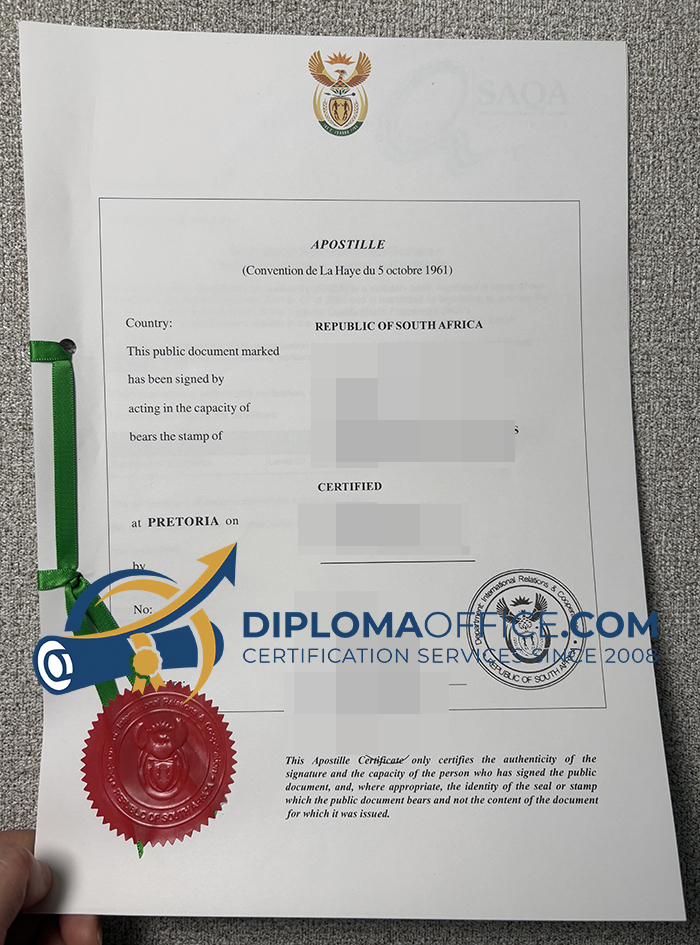
What Is an Apostille and South Africa’s Hague Convention Standing
The 1961 Hague Convention abolished redundant multi-step consular legalisation for cross-border public documents, creating a unified verification stamp known as an Apostille. South Africa ratified this treaty in August 1994, with enforcement starting April 1995, making it a full participating nation eligible to issue official apostille certifications for local public paperwork.
The Department of International Relations and Cooperation (DIRCO) acts as South Africa’s sole competent authority for all apostille issuance. Its core function is verifying official signatures, institutional seals, and stamps on domestic documents; it does not validate the factual content of files, only their issuing authority’s legitimacy. For anyone planning to move, study, work, or conduct business in another Hague member state, securing this stamp eliminates mandatory embassy attestation steps required for non-convention countries. This streamlined verification framework is the foundational purpose behind the formal South Africa Apostille process recognised globally across 126 signatory territories as of 2026.
Eligible Document Categories for Apostille Submission
DIRCO accepts only original public documents or notarised certified copies for apostille processing, split into four core practical categories for user clarity:
1. Civil status paperwork: Unabridged birth, marriage, death, and divorce certificates, letters of no impediment, citizenship confirmation, and adoption court orders issued by the Department of Home Affairs or South African courts. Police clearance certificates from SAPS are also included, with a strict 6-month validity window from their issue date.
2. Academic credentials: Matric NSC certificates, university diplomas, academic transcripts, SAQA qualification evaluations, and professional body registrations for medical, engineering, and teaching practitioners. Many overseas universities require apostilled degrees to confirm credential authenticity during admission or work visa screening.
3. Commercial corporate files: CIPC company registration documents, SARS tax clearance certificates, board resolutions, notarised powers of attorney, and sworn business affidavits for cross-border trade, overseas company setup, or international contract signing.
4. Legal judicial records: Court judgements, notarial deeds, child travel consent letters, and official will documents stamped by South African judicial officers.
Private unsigned personal papers, uncertified photocopies, and expired official records are automatically rejected during submission screening at DIRCO Pretoria offices.
Step-by-Step Official Processing Routes, Timelines and Costs
Three legitimate submission channels exist, each with distinct timelines and pricing, all set by DIRCO’s 2026 updated service rules:
1. In-person booked walk-in submissions (recommended fastest): Daily limited booking slots are available online. Five documents or fewer receive same-day processing; 5–10 files take one working day, while batches above 10 require two business days. The official government fee stands at ZAR 100 per document for standard service, ZAR 200 for expedited priority handling.
2. Courier postal submissions: Applicants send original documents with a prepaid return envelope to DIRCO’s Rietondale Pretoria address. Processing takes 3–4 weeks due to mail handling delays, with the same per-document base fee applicable.
3. Registered third-party agency support: Licensed DIRCO agents handle booking, document pre-verification, and collection on behalf of busy applicants. Processing ranges from 1–2 weeks, with additional service fees between ZAR 500–2,000 layered onto the mandatory government apostille charge.
Critical pre-submission requirement: Academic and professional certificates must first receive official verification from bodies like SAQA or Umalusi before DIRCO can affix the apostille stamp; skipping this pre-check results in automatic application rejection.
Key Validity Rules and Critical User Misconceptions
An apostille stamp itself has no fixed standalone expiry date; its validity aligns entirely with the underlying public document’s lifespan. For example, a 6-month SAPS police clearance certificate remains only legally valid abroad for half a year even after apostille certification, while permanent records like birth certificates retain unlimited apostille recognition.
Three widespread misconceptions frequently delay international applications:
– Myth 1: Apostille replaces notarisation.
Reality: Private copies first need notarisation from a South African notary public before apostille submission; standard commissioner of oaths certifications are not accepted by DIRCO.
– Myth 2: Apostille works worldwide.
Reality: Only Hague Convention nations accept apostilles. Destinations such as the UAE, Qatar, and mainland China demand full dual-stage consular authentication instead of apostille stamps.
– Myth 3: Embassies overseas can issue apostilles for South African documents.
Reality: Foreign South African missions only offer standard authentication certificates and cannot produce apostille stamps; all apostille work must originate within South Africa via DIRCO headquarters.
Real-World Use Cases and Practical Application Benefits
For individual users, apostilled documents simplify critical life milestones: international student visa approvals, skilled migrant work permits, spousal immigration applications, and overseas property purchases. Business owners rely on apostilled corporate paperwork to register foreign subsidiaries, bid on cross-border government tenders, and validate shareholder identities for global financial institutions.
Compared to the lengthy multi-embassy legalisation process for non-Hague countries, apostille delivers tangible advantages: reduced administrative waiting times, lower cumulative fees, and universal automatic recognition across all treaty signatory nations. Expats who skip this mandatory verification step risk full rejection of visa, residency, or employment applications by foreign immigration and regulatory authorities, creating costly resubmission delays.
Closing Summary
Navigating apostille requirements does not require complex legal expertise, provided applicants follow DIRCO’s official document preparation, submission, and timeline guidelines. By understanding eligible paperwork, processing pathways, validity limits, and common pitfalls, individuals and businesses can efficiently authenticate South African official records for seamless international use, avoiding costly administrative errors and cross-border document rejection.