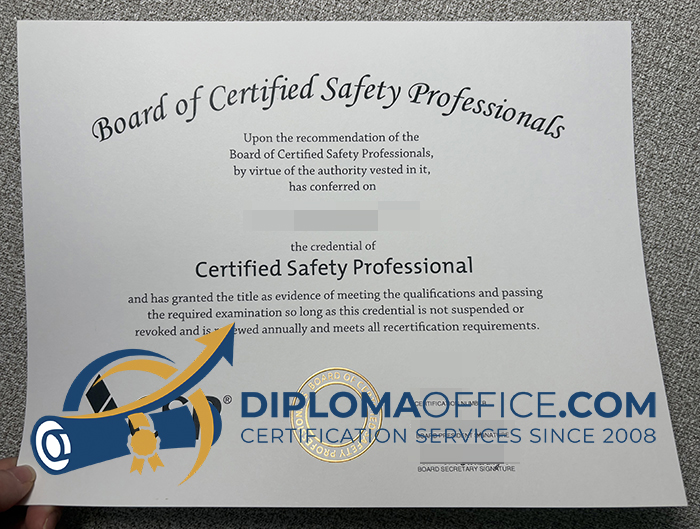
A Certified Safety Professional (CSP) is a globally recognized expert in occupational health and safety, dedicated to mitigating workplace hazards, optimizing safety management systems, and ensuring organizational compliance with industry and governmental safety standards. Administered by the Board of Certified Safety Professionals (BCSP) in the United States, this professional credential stands as the gold standard in the environmental, health, and safety (EHS) industry, widely respected across manufacturing, construction, energy, and industrial sectors worldwide. Professionals holding this designation are equipped with advanced theoretical knowledge and practical field experience, enabling them to lead comprehensive safety initiatives and protect workforce well-being.
Core Definition and Professional Positioning
The Certified Safety Professional credential is designed for senior safety practitioners who take leadership roles in workplace safety governance. Unlike entry-level safety certifications that focus on basic operational rules, the CSP targets professionals responsible for systematic risk management, hazard analysis, incident investigation, and safety culture building. Their core duties cover developing safety policies, implementing risk control strategies, designing emergency response plans, and conducting safety training for organizational teams. As an ISO/IEC 17024 accredited credential, it verifies that holders possess standardized, industry-leading competencies to address complex workplace safety challenges, distinguishing qualified senior safety experts from general safety staff.
Official Eligibility and Certification Requirements
Obtaining CSP qualification demands strict academic and professional prerequisites, ensuring the credibility and authority of the certification. Candidates must hold a bachelor’s degree or higher in any discipline, paired with a minimum of four years of professional safety work experience where over 50% of job duties involve safety program development, risk assessment, and hazard prevention. The rigorous CSP exam consists of 200 multiple-choice questions, covering nine core domains including advanced safety science, risk management systems, emergency preparedness, fire safety, and industrial hygiene. Completing the full assessment process earns candidates the official CSP Certificate, a verifiable proof of their expert-level safety capabilities.
Industry Value and Career Advantages
The CSP credential delivers substantial professional and industrial value for safety practitioners. Globally recognized in more than 100 countries, it is a preferred or mandatory qualification for senior EHS positions in Fortune 500 companies, international contractors, and governmental safety departments. For organizations, hiring CSP-certified professionals reduces workplace accident rates, improves regulatory compliance, and enhances corporate safety reputation. For individuals, this certification significantly boosts career competitiveness, opening doors to high-level roles such as safety director, EHS manager, and industrial risk consultant. It also serves as reliable evidence of professional proficiency for clients, employers, and industry regulators.
Industry Recognition and Development Prospects
With over 40,000 certified professionals worldwide, the CSP has become the most authoritative benchmark for senior safety professionals. As global workplace safety regulations grow increasingly stringent, the demand for qualified CSP holders continues to rise. This credential not only validates existing professional expertise but also encourages continuous learning in dynamic safety technologies and regulatory updates. For safety practitioners committed to long-term industry development, becoming a Certified Safety Professional is a pivotal step to achieve professional upgrading, industry recognition, and sustainable career growth in the global EHS field.