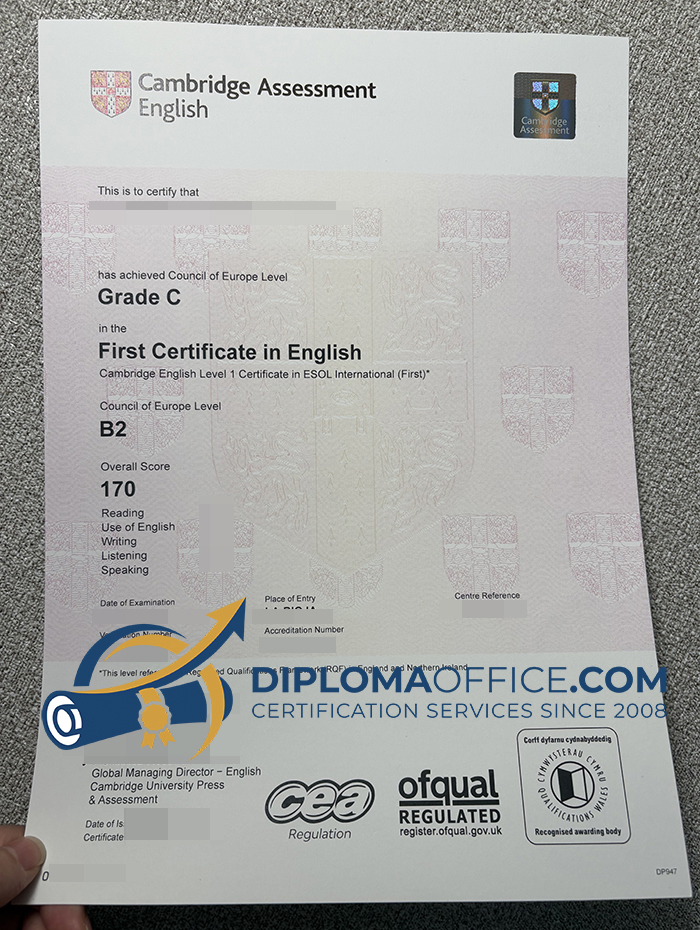
The Cambridge B2 First, formerly known as the First Certificate in English (FCE), is a globally recognized mid-upper English proficiency qualification aligned with the CEFR (Common European Framework of Reference for Languages). As one of the most popular Cambridge English Qualifications, it bridges the gap between intermediate B1 and advanced C1 language levels, proving that learners possess practical, real-world English skills for academic, professional, and daily communication. The official Cambridge B2 Certificate validates consistent, well-rounded English competence, trusted by educational institutions and employers across over 130 countries worldwide.
Core Definition and CEFR Alignment
CEFR B2 level represents independent English proficiency, a critical milestone for language learners. Unlike basic intermediate qualifications, B2 certified learners can understand complex texts on abstract and technical topics, communicate fluently and spontaneously with native speakers without strain, and produce clear, detailed writing on a wide range of subjects. This level is designed for learners who have moved beyond basic conversational English and can apply language skills in high-stakes scenarios, including university foundation courses, international job roles, and cross-border communication. It serves as a credible benchmark for practical English mastery, avoiding the limitations of beginner and low-intermediate certifications.
Standard Exam Structure and Format
The Cambridge B2 First exam adopts a comprehensive four-paper structure, evaluating all core language skills with equal scoring weight, and can be taken in either paper-based or computer-based format with identical content and scoring standards. The total exam duration is approximately 3 hours and 30 minutes, with flexible scheduling for the speaking test, which may be arranged on a separate day.
Reading and Use of English (75 minutes) is the foundational section, testing vocabulary, grammar, word formation, and text comprehension through 52 diverse questions. The Writing section (80 minutes) requires candidates to complete two structured tasks, including an essay and a choice of creative or formal writing, assessing logical organization and linguistic accuracy. The 40-minute Listening section evaluates the ability to understand daily conversations, lectures, and news excerpts. Finally, the 14-minute face-to-face Speaking test assesses interactive communication, pronunciation, and spontaneous response with examiners and partners.
Official Scoring and Grading System
The exam uses the official Cambridge English Scale, with scores ranging from 140 to 190. A minimum score of 160 is required to obtain the B2 level pass certificate. Candidates scoring 173–179 receive a Grade B, while 180–190 earns a Grade A, which demonstrates C1 advanced-level potential. Scores below 160 but above 140 indicate B1 level proficiency. Notably, all four exam sections contribute equally to the final score, requiring learners to maintain balanced skills rather than excelling in only one area, ensuring the certification’s high credibility and accuracy.
Practical Academic and Professional Value
The Cambridge B2 First certification delivers tangible benefits for learners of all backgrounds. Academically, it is widely accepted for admission to international foundation programs, pre-sessional English courses, and undergraduate programs in non-English speaking countries, exempting many students from additional language entry tests. Professionally, it serves as a trusted resume credential for global enterprises, proving candidates’ ability to handle workplace communication, business emails, and international meetings.
Unlike short-term language test results, this certification is lifelong valid, with no expiration date, making it a long-term investment in personal language competence. It also provides a clear learning roadmap, helping learners identify their language strengths and gaps to advance toward C1 Advanced proficiency.
Suitable Candidates and Learning Guidance
This qualification is ideal for learners aged 16 and above with solid B1 intermediate foundations. It is particularly suitable for students preparing for overseas study, professionals pursuing international careers, and language enthusiasts aiming to systematize their English skills. To pass the exam efficiently, learners should focus on balancing all four skills, practicing real exam tasks, and accumulating academic and professional vocabulary, rather than relying on rote memorization. Its scientific, holistic assessment system makes it the most cost-effective and authoritative mid-level English certification for global learners.