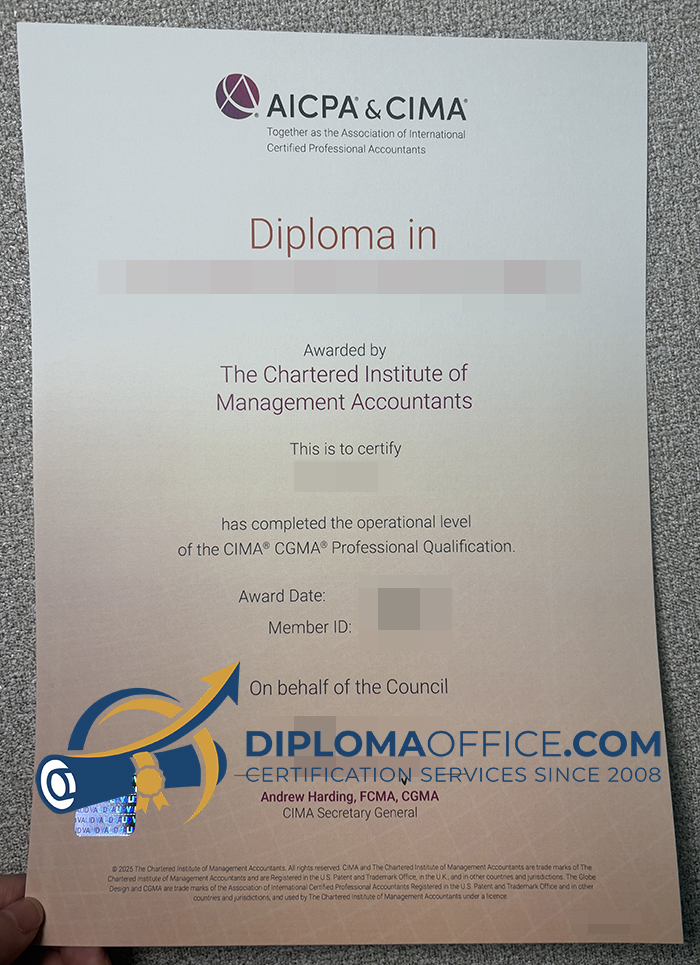
Foundational Background: Two Leading Accounting Bodies United Globally
AICPA (American Institute of Certified Public Accountants) and CIMA (Chartered Institute of Management Accountants) operate collectively under the official name *Association of International Certified Professional Accountants*, forming the world’s largest unified finance professional alliance. Founded in 1887, AICPA originated in the United States as the standard-setter for public accounting, audit ethics, and the Uniform CPA Examination, holding more than 418,000 members across 143 territories. Established in 1919 in the UK, CIMA pioneered global management accounting frameworks, with 232,000 registered learners and members focused on corporate finance, business strategy, and performance analysis.
The two bodies formalized their strategic partnership in 2017, merging educational resources, research teams, and credential systems to address the rising demand for cross-border finance expertise. Today, the alliance serves nearly 700,000 professionals, students, and registrants in over 150 countries, bridging the gap between US public accounting standards and European management accounting practice. Unlike isolated national accounting bodies, AICPA & CIMA unify audit, tax, corporate FP&A, risk management, and ESG reporting under one cohesive global competency model.
Core Credentials & Qualification Pathways
The alliance delivers tiered learning routes for beginners, mid-career finance staff, and senior leadership candidates, with progressive certifications aligned to workplace competency requirements. The entry-level pathway starts with foundational business accounting training, where successful completion of four core assessment papers awards learners the AICPA & CIMA Certificate, a standalone industry-recognized baseline qualification for entry-level finance, bookkeeping, and junior analyst roles. This certificate acts as a flexible gateway to advanced professional tracks, including the full CGMA (Chartered Global Management Accountant) qualification and US CPA licensing.
For career advancement, two flagship advanced credentials stand out: the US CPA, governed solely by AICPA, which specializes in external audit, US tax compliance, regulatory reporting, and public practice; and the CGMA designation, co-created by both organizations in 2012 to standardize strategic management accounting worldwide. The CGMA framework covers operational finance, organizational risk, capital strategy, and sustainable business planning, updated annually to integrate emerging topics like generative AI finance tools and global ESG disclosure rules. CPAs enjoy accelerated CGMA qualification pathways, with exam exemptions cutting study timelines by more than half, reflecting the alliance’s goal to create flexible cross-disciplinary finance credentials.
Global Industry Recognition & Employer Value
From multinational conglomerates to regional SMEs, public accounting firms, and government finance departments, employers universally prioritize AICPA & CIMA credentials for their balanced technical and strategic skill sets. US CPA holders dominate Big Four audit, tax advisory, and US-listed company reporting roles across North America, while CGMA members fill finance business partner, Financial Controller, and CFO positions in European, Asian, and African multinationals. Multiple major Chinese municipal governments, including Shanghai, Beijing, and Guangzhou, list CGMA holders in high-end talent incentive rosters, granting visa, housing, and career development benefits to qualified professionals.
Salary benchmark data compiled by AICPA & CIMA’s global salary survey confirms strong financial returns: newly qualified CGMA professionals earn 20–35% above regional finance industry median salaries, while senior CGMA Finance Directors and CPA audit partners command six-figure base compensation plus performance equity in most global markets. Recruiters consistently highlight one unique advantage of the dual alliance credentials: holders can seamlessly shift between public audit practice and in-house strategic finance, a mobility unavailable to graduates of single-focus regional accounting bodies.
Professional Development & Future-Focused Industry Leadership
Beyond exams and credentials, AICPA & CIMA deliver lifelong continuing professional education (CPE) and forward-thinking industry research to future-proof finance practitioners. All credential holders must complete mandatory annual CPE hours—40 hours yearly for CGMA members and 120 hours every three years for US CPAs—to maintain active professional standing. The alliance regularly publishes flagship research, including the 2026 Rise2040 global finance transformation initiative, which analyzes AI disruption, evolving stakeholder reporting demands, and the shifting role of accountants as strategic business advisors rather than only number processors.
Member exclusive resources include global networking summits, digital skill workshops, ESG reporting toolkits, and real-time updates on cross-border accounting regulations such as US GAAP and IFRS alignment. Unlike many smaller accounting associations, AICPA & CIMA actively collaborate with international regulators, including the IFAC and global stock exchange authorities, to shape unified finance reporting standards, ensuring its members remain compliant with evolving worldwide financial governance rules.
Conclusion
AICPA & CIMA’s century-spanning combined expertise creates an unmatched global accounting ecosystem that caters to every stage of a finance career, from entry-level certification through C-suite leadership credentials. The alliance’s integrated learning paths, cross-border employer recognition, and forward-looking industry research make its portfolio of qualifications the gold standard for finance professionals targeting international mobility and long-term strategic career growth.