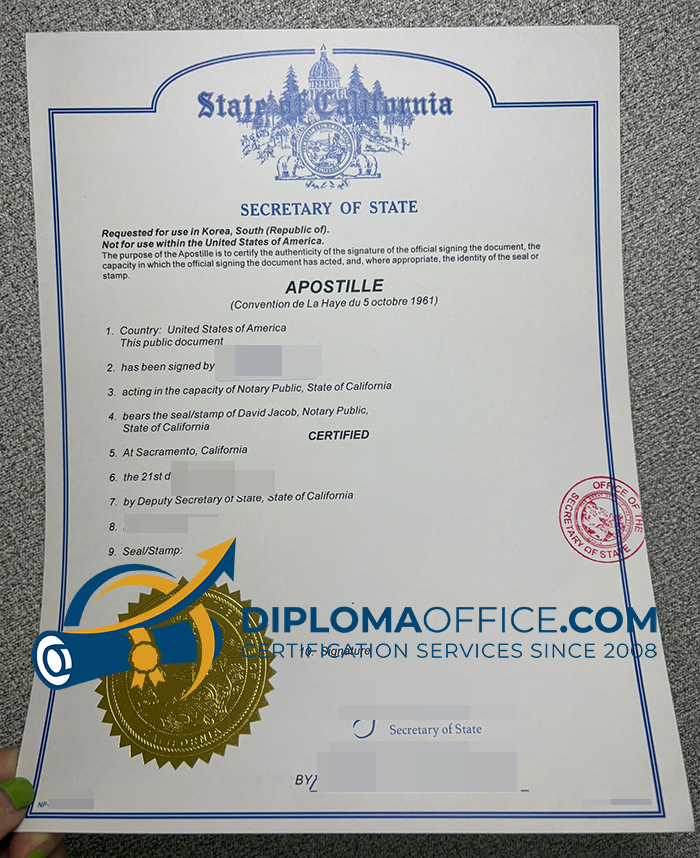
Global mobility, cross-border business and overseas legal procedures frequently require official documents to gain legal recognition in foreign nations. For paperwork issued or notarized within California, individuals and companies rely on standardized international authentication governed by the 1961 Hague Apostille Convention. This practical guide breaks down core concepts, eligibility criteria, official procedures and common pitfalls to streamline your international documentation process.
What Is an Apostille and Its Legal Foundation
An apostille is an official supplementary certificate that verifies the authenticity of signatures, official seals and the authority of public officials on public documents. Crucially, it does not validate whether the content inside your document is truthful; it only confirms the signing official held legitimate authority to execute the paperwork. The California Secretary of State acts as the sole authorised issuing body within the state, authorised under California administrative law and international Hague Convention protocols.
This certification eliminates lengthy multi-step consular legalization between convention member countries. More than 125 territories worldwide recognise apostille documentation, covering popular destinations including Mexico, Germany, the United Kingdom, Japan, Australia and South Korea. Anyone preparing vital records, academic transcripts or corporate paperwork for use in these territories will need formal authentication, and the California Apostille serves this exact purpose for California-originated files.
Eligible Document Types and Basic Requirements
Not every file qualifies for authentication. Only public documents bearing verified signatures from California public officials are accepted. Common eligible materials fall into three main categories. Personal vital records include certified birth certificates, marriage licences, divorce decrees and death certificates issued by county recorders or California’s Department of Public Health. Educational paperwork encompasses certified diplomas, transcripts and degree documents properly notarized by California notaries. Business and legal files range from powers of attorney, affidavits and court orders to corporate registration documents signed by authorised state or county officials.
A strict rule applicants must follow: photocopies, scanned printouts and uncertified digital documents will be rejected. You must submit original paperwork or officially certified hard copies. All notarized documents need a complete, properly executed notary acknowledgment with a valid California notary seal before submission. Federal documents such as US passports or federal court records cannot receive authentication through the California Secretary of State and require separate federal authentication procedures.
Official Application Channels, Fees and Timelines
Three formal submission routes are available to obtain your apostille: postal mail, in-person counter service and periodic regional pop-up events hosted by state officials. Mail applications are directed to the Sacramento Notary Public Section. The base processing fee stands at $20 for each apostille document. In-person applicants visiting Sacramento or Los Angeles offices face an extra $6 special handling charge for every distinct official signature authenticated. Payment options include money orders, personal checks and credit cards for walk-in submissions.
Processing durations fluctuate based on seasonal demand. Mail-in applications often require several weeks during peak periods, while in-person service can deliver same-day results for prepared paperwork. All submissions must include four components: qualified original document, completed apostille request cover sheet stating the destination country, full payment and a pre-addressed, prepaid return envelope if applying via mail. Always cross-check real-time processing updates published on the California Secretary of State official website before sending materials.
Frequent Misconceptions to Avoid
Many applicants make avoidable mistakes that delay applications. The most widespread misunderstanding is confusing apostille service with full consular legalization. If your destination country has not ratified the Hague Convention, an apostille will not be accepted, and you must complete extended embassy legalization procedures instead. Another common error involves submitting vital records signed by unrecognised local health officers; applicants should obtain updated certified copies signed by county clerks or the state registrar to prevent rejection.
Many overseas applicants also mistakenly attempt to authenticate documents not originating within California. The state office only handles paperwork signed by California public officials. Documents notarized or issued in other US states must go through the apostille authority of that respective state. Finally, applicants should keep digital copies of all submitted materials, as lost documents during transit require reapplication with brand-new certified records.
Practical Use Cases for Individuals and Businesses
Private citizens most often pursue authentication for overseas relocation, international marriage, foreign adoption, visa applications and overseas university enrolment. Companies operating cross-border use apostilles for international contract signing, foreign branch registration, overseas trademark filings and global recruitment processes. Real estate investors purchasing property abroad also rely on authenticated powers of attorney to conduct transactions remotely without physical travel.
Before beginning your application, confirm two critical details: verify your destination country’s Hague Convention membership and double-check local authority rules for document translation requirements. Some foreign governments demand certified translations alongside apostille-certified original files. Proper advance preparation drastically reduces the risk of administrative rejection and unnecessary delays to international plans.