Uniwersytet Muzyczny Fryderyka Chopina, widely known internationally as the Fryderyk Chopin University of Music (UMFC), stands as Poland’s oldest and most prestigious public higher music education institution. Nestled in central Warsaw, this historic conservatory attracts aspiring musicians from every continent, balancing deep European classical heritage with contemporary artistic innovation. For international applicants researching music schools in Central Europe, understanding its history, academic offerings, global partnerships and graduate prospects delivers clear insights for study planning.
History & Institutional Legacy of UMFC
The roots of UMFC trace back to 1810, founded originally as the Main School of Music by Józef Elsner, the teacher of Fryderyk Chopin. The institution endured dramatic upheaval through the 19th and 20th centuries, including destruction during the Second World War and multiple structural reorganisations. It officially adopted its current name Uniwersytet Muzyczny Fryderyka Chopina in 2008, honouring Poland’s iconic composer.
Unlike many smaller conservatories across Europe, UMFC maintains continuous, unbroken artistic traditions linked directly to the Romantic musical era. It operates a main campus in Warsaw and a regional branch in Białystok, forming a comprehensive national hub for musical training. As a publicly funded university supervised by Poland’s Ministry of Culture and National Heritage, it meets strict European standards for artistic higher education.
Academic Programmes and Study Structure
UMFC delivers structured education across three official degree cycles compliant with the Bologna Process, ensuring ECTS credit recognition throughout the European Higher Education Area. Its departments cover all core musical disciplines: instrumental performance, vocal arts, conducting, composition, music theory, jazz, sound engineering, church music, music education and dance.
Programme tiers include first-cycle Bachelor of Arts, second-cycle Master of Arts, and third-cycle doctoral studies in musical arts. Select postgraduate artistic internships are also available for professional musicians seeking advanced specialisation. Many faculties offer English-taught pathways, making the university accessible to overseas students without fluent Polish. Admission relies heavily on competitive entrance auditions, evaluating practical performance skills alongside theoretical knowledge.
International Collaboration and Student Experience
Global mobility is a core strategic priority for UMFC. The university maintains Erasmus+ exchange agreements with over 120 music academies across Europe, alongside formal partnerships with conservatories in Asia and North America. Every academic year, dozens of international students enrol full-time, while local students travel abroad for semesters of exchange training.
Campus life includes hundreds of public student recitals, orchestral concerts, masterclasses led by world-famous soloists, and participation in national and international music competitions. These regular performance opportunities distinguish UMFC from purely theoretical universities, allowing learners to build professional portfolios before graduation. The alumni community features celebrated artists including Jakub Józef Orliński, Grażyna Bacewicz and Ignacy Jan Paderewski.
Career Outlook and Global Value of UMFC Qualifications
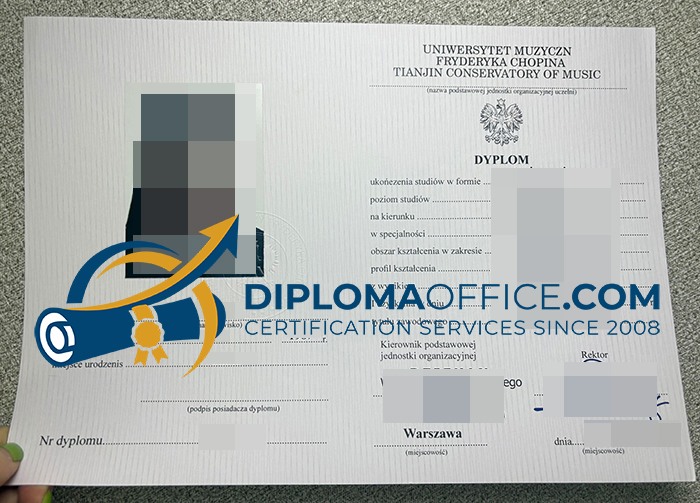
Graduates pursue varied professional paths: orchestral instrumentalists, opera vocalists, composers, music educators, sound producers, conductors and cultural administrators. Within the European Union, qualifications issued by Polish state art universities enjoy automatic formal recognition. Students completing all degree requirements receive official certification, and the UMFC diploma is respected by orchestras, opera houses and music schools across Europe and further afield.
Many overseas graduates leverage their qualification to secure artist visas, teaching posts or performance contracts in Western Europe, North America and Asia. The university’s career office provides tailored support for audition preparation, portfolio development and networking within the global music industry. For those considering further education, the doctoral school at UMFC offers advanced research and artistic training.
Conclusion
Uniwersytet Muzyczny Fryderyka Chopina represents an outstanding choice for musicians seeking rigorous training rooted in Central European classical traditions, with flexible international study options. Its centuries-long legacy, distinguished teaching staff, extensive performance platforms and widely recognised academic credentials establish UMFC as one of Eastern Europe’s most compelling destinations for higher music education. Whether candidates aim for performance careers, academic research or music education, studying at this Warsaw conservatory opens lasting artistic and professional opportunities worldwide.