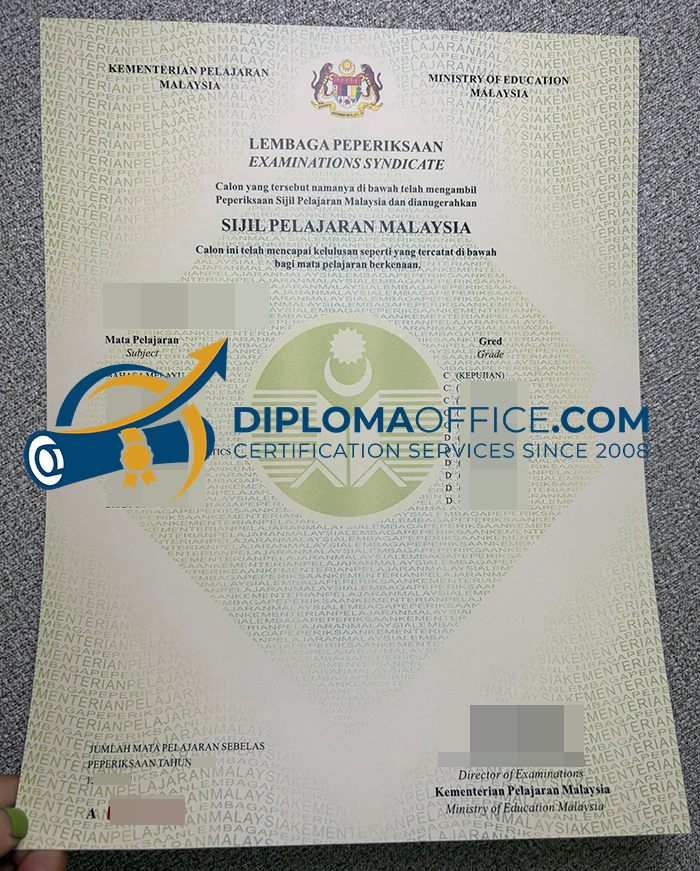
The Sijil Pelajaran Malaysia (SPM) is Malaysia’s official national secondary school leaving examination, serving as a core academic benchmark for local secondary education. Administered by the Malaysian Examinations Syndicate (Lembaga Peperiksaan Malaysia) under the Ministry of Education, this standardized assessment is taken by nearly all Malaysian students at the end of Form 5, typically at the age of 17. As a globally recognized secondary qualification, it lays a solid foundation for students’ future academic advancement and early career development, with the official SPM Certificate acting as verifiable proof of students’ secondary academic proficiency for further study and employment applications.
Core Definition and Basic Eligibility
SPM is the final assessment for Malaysia’s 11-year formal secondary education system, replacing the colonial-era Cambridge-administered Malayan Certificate of Education with a localized, national curriculum-based examination. Unlike international school qualifications such as IGCSE, SPM strictly adheres to Malaysia’s national education framework, balancing academic knowledge and practical competency. The primary eligible candidates are full-time Form 5 students from government and private national secondary schools, while private candidates can also register under official examination regulations. Held annually in November, the exam follows unified national syllabi, marking standards and grading rules to ensure fair and consistent assessment nationwide.
Examination Structure and Subject Coverage
The SPM examination features a flexible subject combination mechanism with fixed compulsory core subjects and optional elective subjects to cater to diverse student interests and career orientations. Compulsory subjects include Bahasa Malaysia, English, Mathematics, History, and Islamic Education or Moral Education, which are mandatory for all candidates to qualify for a full SPM qualification. For elective subjects, students can choose from science streams (Additional Mathematics, Physics, Chemistry, Biology), humanities streams (Literature, Geography, Economics), and vocational or technical subjects.
Each subject combines written papers and, for practical disciplines, hands-on assessments. This comprehensive evaluation model avoids over-reliance on theoretical knowledge, effectively testing students’ logical thinking, problem-solving abilities and practical application skills, aligning with modern secondary education assessment standards.
Academic and Professional Significance
SPM results are the most critical admission criterion for Malaysia’s pre-university education pathways. Outstanding grades enable students to access government matriculation programs, Form 6 (STPM track), prestigious foundation courses, and competitive diploma programs at local public and private institutions. Most Malaysian higher education institutions set minimum SPM grade requirements, especially credit grades in core subjects, as the basic admission threshold.
Beyond academia, SPM qualifications also support entry-level employment in Malaysia. Many local administrative, retail, and entry-level corporate positions recognize SPM as a valid minimum academic credential, making it an essential baseline qualification for young job seekers with secondary education backgrounds.
Grading System and Global Recognition
SPM adopts a detailed 11-tier grading system ranging from A+ (highest distinction) to G (fail), with a Grade C defined as the official credit pass standard for further education applications. This precise grading scale allows universities and employers to accurately evaluate students’ academic performance levels. In terms of international recognition, SPM is widely equivalent to the UK’s GCSE and Commonwealth GCE O-Level qualifications.
It is accepted by numerous universities across Asia, Europe, and Oceania for foundation and pre-university program admissions. Its alignment with global secondary education standards makes it a reliable credential for Malaysian students pursuing overseas study, bridging local secondary education with international higher education systems.
Key Value for Learners
More than just an examination, SPM standardizes secondary education outcomes across Malaysia and provides a transparent, credible academic evaluation system. It helps students clarify their academic strengths and weaknesses, guiding their subsequent major and career choices. For educators and institutions, SPM results reflect the overall quality of national secondary education, supporting continuous curriculum optimization and teaching improvement.