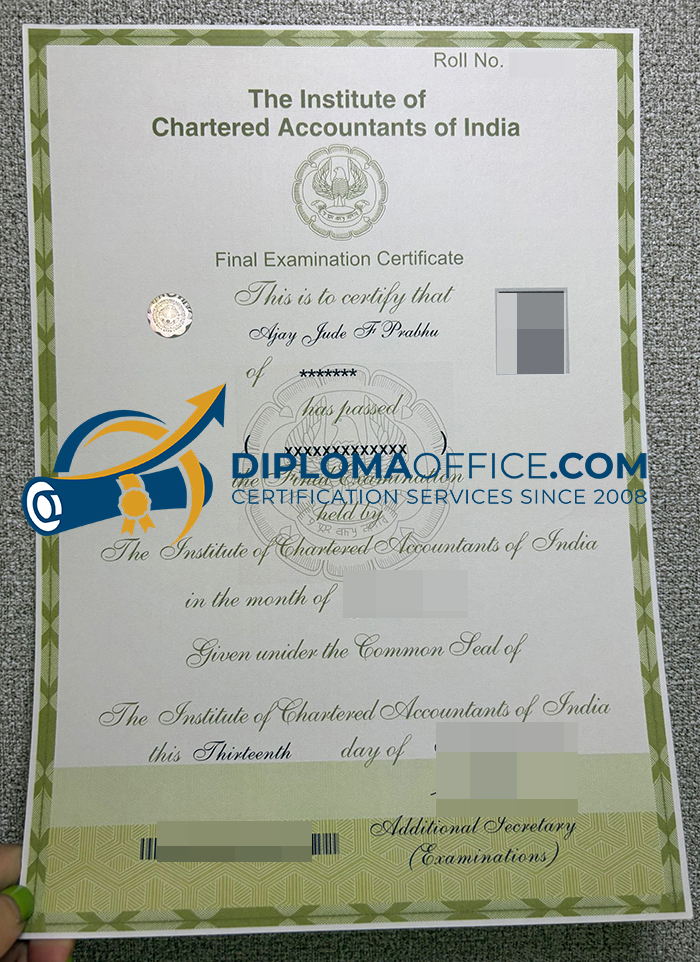
The Institute of Chartered Accountants of India, widely known as ICAI, is India’s statutory regulatory body for chartered accountancy, established on 1 July 1949 under the Chartered Accountants Act, 1949. Operating under the Ministry of Corporate Affairs, Government of India, ICAI ranks as the world’s largest professional organisation for chartered accountants, tasked with setting accounting standards, conducting rigorous professional examinations, enforcing ethical rules and overseeing practical training for finance professionals. Millions of students pursue its qualification annually, aiming to secure authoritative expertise in auditing, taxation, financial reporting and corporate compliance. This multi-dimensional guide breaks down its structure, qualification pathway, recognition and career potential for aspiring finance professionals.
Legal Mandate and Core Institutional Functions
Unlike private certification bodies, ICAI holds statutory powers defined by Indian parliament legislation. Its governing council includes elected chartered accountants and government-nominated representatives from key regulators such as SEBI and the Comptroller and Auditor General of India. Core responsibilities cover four critical areas: designing and updating the chartered accountancy curriculum, administering all levels of CA examinations, monitoring mandatory practical articleship training, and disciplining members for breaches of professional ethics.
Under Indian corporate law, only active ICAI members hold the legal authority to perform statutory audits, certify tax filings and sign official financial statements for registered companies. This exclusive statutory right makes its qualification indispensable for domestic audit practice in India. The institute also contributes to national financial policy consultations, develops Indian Accounting Standards (Ind AS), and delivers continuing professional development programmes for practising and employed members.
ICAI Qualification Pathway and Assessment Framework
The updated ICAI syllabus (2023 new scheme) structures the chartered accountancy journey into three sequential examination tiers paired with mandatory practical training. Candidates begin with the CA Foundation entry-level exam. After clearing this stage, students progress to CA Intermediate, covering advanced accounting, corporate law, taxation and auditing fundamentals. Upon passing Intermediate, candidates complete a 2-year articleship under a practising chartered accountant to gain real-world industry exposure before attempting the CA Final examinations.
The CA Final level addresses complex topics including strategic financial management, advanced auditing, international taxation and corporate restructuring. Successful completion of all exams, articleship requirements and ethics training qualifies candidates for ICAI membership. Upon admission as a member, professionals receive formal recognition, and qualified practitioners may apply for a practice licence. The ICAI Certificate awarded to successful candidates confirms compliance with all academic and practical criteria required to practise chartered accountancy.
Global Recognition and Mutual Recognition Agreements
ICAI maintains extensive international ties as a member of the International Federation of Accountants (IFAC). It has signed mutual recognition agreements (MRAs) and memorandums of understanding with leading global accounting bodies, including CPA Australia, CPA Canada, SAICA (South Africa), CPA Ireland and ICAEW. These agreements create streamlined pathways for ICAI members to obtain overseas professional membership after completing limited bridging assessments.
Independent evaluations by UK NARIC benchmark the ICAI Final qualification to master’s degree level under the UK qualifications framework. While the qualification carries maximum authority within India, overseas practitioners must verify local regulatory requirements to secure audit signing rights in foreign jurisdictions. ICAI operates over 50 overseas chapters across 47 countries, supporting Indian chartered accountants working for multinational firms, Big Four accounting networks and global shared service centres.
Career Prospects for ICAI Chartered Accountants
ICAI-qualified professionals access diverse high-demand career tracks. Many establish independent practices offering audit, GST consulting, income tax advisory and business valuation services. Others secure senior corporate roles such as Chief Financial Officer, finance controller, internal audit head and risk management specialist across manufacturing, banking, IT and infrastructure sectors. Global capability centres and multinational corporations actively recruit ICAI members for their strong command of Indian tax regulations, Ind AS and cross-border compliance.
Specialised niches including forensic audit, insolvency resolution, transfer pricing and sustainability reporting have grown rapidly in recent years. Even without public audit practice ambitions, the qualification remains highly valued for finance leadership, investment advisory and treasury management roles. Domestic salary benchmarks reflect consistent market demand, with fresh graduates securing competitive compensation packages at leading audit firms and enterprises.
Limitations and Key Considerations for Prospective Students
Aspiring candidates must understand critical constraints before enrolling. The course demands long-term commitment; many students take 4–5 years to complete all stages. Examinations follow a group-based clearing system, raising the threshold compared to modular international accounting certifications. While MRAs enable global mobility, ICAI membership does not automatically grant audit signing rights outside India. Candidates targeting full unrestricted practice in Europe, North America or Southeast Asia may need supplementary local qualifications.
Additionally, the curriculum focuses heavily on Indian tax laws and domestic corporate regulations. Learners prioritising purely international IFRS-focused roles may combine the ICAI qualification with supplementary global certifications to broaden cross-border expertise.
Conclusion
ICAI remains the gold-standard accounting qualification for anyone targeting finance, audit and tax careers within India, supported by statutory authority, stringent training standards and expanding international partnerships. Its structured pathway balances theoretical knowledge and hands-on practical experience, producing professionals capable of navigating complex domestic financial regulations. For students weighing accounting certifications, evaluating career goals—whether domestic practice, corporate finance or global mobility—will clarify whether the ICAI qualification aligns with long-term professional objectives.