John F. Kennedy University (JFKU) was a distinctive private nonprofit university rooted in California’s San Francisco Bay Area, widely celebrated as an early pioneer of flexible higher learning for working and non-traditional adult learners. Founded in 1964 and named after U.S. President John F. Kennedy, the institution carved out a unique educational mission before permanently ceasing independent operations in 2020, transferring all academic programs and student records to other schools within the National University System. Thousands of professionals completed undergraduate, graduate and doctoral training here, making it a notable choice for learners seeking career-focused education in psychology, legal studies, museum studies and business administration.
Origins, Mission and Institutional Timeline
Established in Pleasant Hill, California, John F. Kennedy University was built around a simple core goal: opening university access to adult students whose professional schedules prevented them from enrolling in rigid full-time on-campus degrees. Unlike most American universities of its era, it prioritized blended learning, evening classes and part-time study pathways long before remote education became mainstream. In 2009, the university joined the National University System while retaining independent academic governance for more than a decade.
A critical detail for researchers and alumni is the school’s closure in 2020. It did not declare bankruptcy; instead, administrators orchestrated an orderly transition of curricula, student support services and official academic archives. Today, National University serves as the official custodian of all academic records for former students, handling transcript requests and verification inquiries from employers and education institutions globally.
Academic Offerings and Program Strengths
During its operation, JFKU organised academics across multiple colleges with standout niche disciplines. Its College of Psychology and Holistic Studies earned particular recognition, housing APA-accredited Doctor of Psychology (PsyD) training, counselling psychology master’s degrees and pioneering specialisations in sport psychology and trauma-informed holistic therapy. Many programs integrated mandatory clinical internships at university-run community counselling clinics, bridging classroom theories with real-world client practice.
Additional high-demand fields included museum studies, business leadership, legal studies and undergraduate degree-completion tracks for transfer students. The former School of Law was authorised by the California State Bar, enabling graduates to sit for California bar examinations, though it lacked full ABA accreditation, which limited interstate legal practice mobility for alumni. Course delivery combined leased campus locations in San Jose and Pleasant Hill with early distance education options, accommodating learners across Northern California.
Accreditation and Credential Recognition
Regional accreditation formed the foundation of the university’s academic credibility. John F. Kennedy University held formal accreditation from the WASC Senior College and University Commission, the respected regional accrediting body for higher education institutions in the western United States. This regional accreditation meant all completed academic credentials carried legitimate academic standing while the school operated.
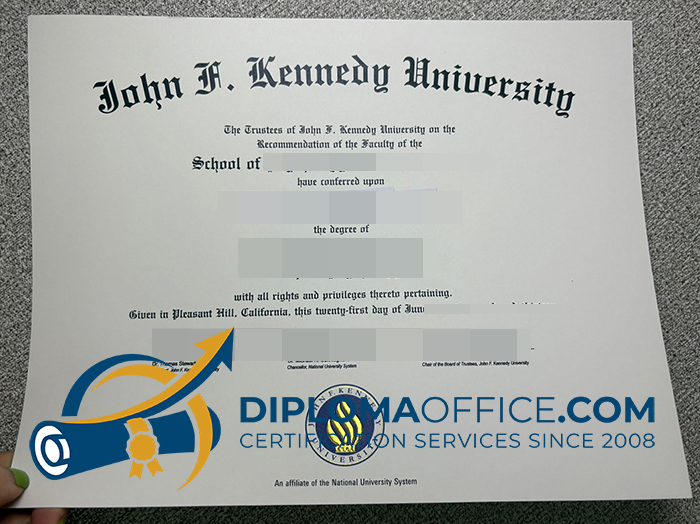
For alumni evaluating professional or further education opportunities, understanding document validity is essential. Anyone seeking formal proof of completed studies can submit requests for official records through National University. A verified John F Kennedy University diploma remains a recognised academic credential for applications to graduate schools, licensing boards and employers, provided applicants follow official channels for authentication and verification.
Target Learner Profile and Alumni Outcomes
JFKU’s student population was overwhelmingly composed of mature adult learners, many returning to education after years in the workforce. Most students balanced part-time studies with full-time careers in mental health services, nonprofit management, museum administration, legal support and corporate leadership. This learner demographic shaped teaching styles: faculty prioritised practical skill-building, peer discussion and integrating professional work experience into coursework.
Alumni pursue diverse careers, with large groups working as licensed counsellors, organisational psychologists, museum administrators, nonprofit executives and paralegals. While the university no longer accepts new enrolments, its alumni network remains connected through the National University alumni association, which offers continued library access, professional events and career resources for former JFKU students.
Key Considerations for Prospective Researchers and Alumni
Individuals researching the university or holding credentials from JFKU need to distinguish this California institution from similarly named medical schools operating in other regions. Due to the 2020 closure, there is no active admissions office for new applicants, and all record-related communications must be directed to National University’s registrar teams.
Learners considering comparable modern alternatives can explore psychology, museum studies and adult degree-completion programs within the National University System, which inherited many of JFKU’s signature curricular frameworks. For credential verification, employers and international agencies are advised to use official custodian records rather than outdated university contact information.