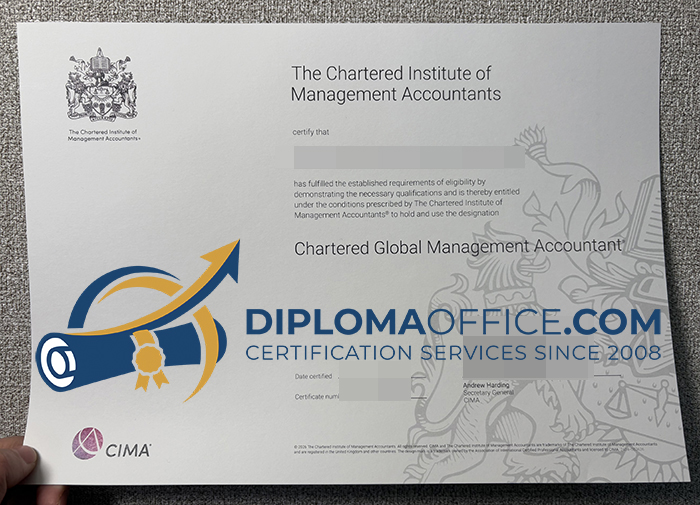
Core Definition & Foundational Background of CGMA
CGMA stands for Chartered Global Management Accountant, a top-tier global management accounting designation jointly launched by two world-leading professional bodies: CIMA (Chartered Institute of Management Accountants) and AICPA (American Institute of CPAs). Launched to unify global standards for strategic finance professionals, this credential targets finance practitioners who bridge accounting, business operations, corporate strategy and risk governance, rather than only focusing on external financial reporting.
Over 150,000 professionals across 188 countries hold the CGMA title, forming a worldwide network of business-focused finance experts. Unlike pure financial accounting credentials centred on compliance and audit, CGMA builds core competencies to support internal decision-making, digital transformation, sustainability planning and long-term corporate growth. The CGMA Certificate serves as a formal milestone for learners advancing through structured exam tiers before qualifying for the full CGMA designation after meeting work experience criteria.
Exam Structure, Eligibility & Completion Requirements
The official CGMA Professional Qualification follows a three-level progressive framework built around three knowledge pillars: Enterprise, Performance and Financial Strategy. Each level includes three objective test papers and one comprehensive case study exam simulating real corporate leadership scenarios, prioritising applied critical thinking over rote memorisation.
1. Operational Level: Covers entry-level management accounting, digital finance and basic reporting for junior finance analysts.
2. Management Level: Deepens performance management, corporate finance and advanced internal reporting for finance managers.
3. Strategic Level: Explores enterprise risk, strategic formulation, digital transformation and M&A valuation for senior finance leaders.
To earn the full CGMA designation after passing all strategic-level assessments, candidates must submit verified evidence of three years of relevant management accounting practical experience (PER). Eligibility pathways vary: university graduates with business degrees can skip foundational entry tests, while career switchers without accounting backgrounds start with the introductory Certificate in Business Accounting. Full completion typically takes 3–5 years, with exam exemptions available for holders of recognised finance degrees or other accounting qualifications.
Global Industry Recognition & Employer Value
From an employment perspective, CGMA maintains unmatched cross-border recognition for management accounting roles. Independent employer surveys confirm 87% of multinational corporations prioritise CGMA holders for finance leadership openings and offer salary premiums compared to uncertified finance staff. Top global employers including Unilever, Shell, Tencent and major manufacturing groups maintain formal recruitment partnerships with CIMA-AICPA to source CGMA-qualified talent for financial controller, finance business partner, CFO and risk director positions.
Regionally, multiple Chinese first and second-tier cities (Beijing, Shanghai, Shenzhen, Hainan Free Trade Port) include CGMA in high-level talent rosters, granting perks such as settlement points, tax reductions and government talent subsidies. Unlike audit-focused credentials, CGMA’s industry bias makes it ideal for professionals targeting corporate in-house finance rather than public accounting firms. Its competency framework is regularly updated with input from global business leaders to integrate trending skills: AI financial analytics, ESG reporting and digital risk management, keeping holders aligned with evolving market demands.
Long-Term Career & Salary Advantages of CGMA
CGMA holders follow clear upward career trajectories distinct from traditional financial accountants. Entry-level roles after partial qualification include finance analyst and cost accountant; mid-career positions cover finance manager, performance controller and treasury specialist; senior roles extend to CFO, group finance director and enterprise strategy consultant.
Global salary benchmarks demonstrate steady growth for CGMA professionals: entry-level finance roles with partial CGMA completion deliver 10–15% higher baseline pay, while senior CGMA-qualified CFOs at multinational enterprises earn six-figure annual compensation plus performance bonuses. Beyond salary gains, holders gain lifelong access to exclusive CIMA-AICPA resources: global webinars, industry research reports, regional networking events and continuous professional development (CPD) training required to retain active CGMA status.
Key Distinction Between CGMA and Peer Accounting Credentials
Many learners confuse CGMA with ACCA, US CMA or national CPA qualifications, but their core focus differs sharply:
– ACCA: Specialises in external financial reporting, audit and regulatory compliance, suited for public accounting and tax advisory.
– US CMA: A shorter two-exam credential focused narrowly on internal cost accounting, with limited global cross-border recognition.
– CGMA: Balances accounting, leadership, digital and strategic skills, designed for cross-functional corporate finance leadership across all global markets.
CGMA’s dual institutional backing from CIMA and AICPA creates a unique advantage for professionals working across North America, Europe, Asia and emerging markets, eliminating regional credential barriers during international job transfers.
Conclusion
For finance professionals aiming to move beyond number-crunching into strategic business leadership, CGMA remains the most comprehensive global management accounting credential available. Its structured learning path, real-world assessment design, worldwide employer acceptance and clear career progression make it a worthwhile long-term investment for anyone building a corporate finance career across international markets.