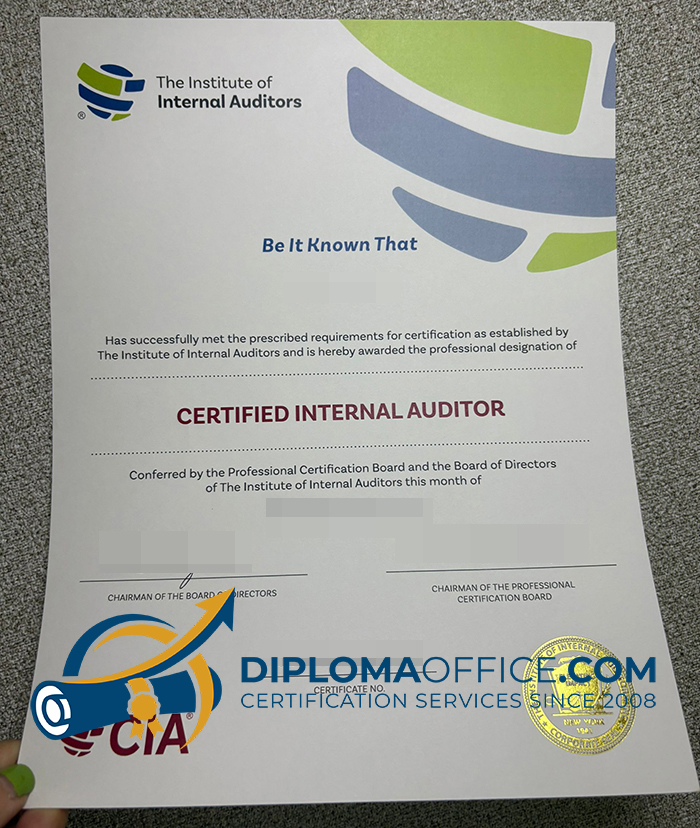
The Certified Internal Auditor, widely known as CIA, stands as the only globally standardized professional credential exclusively tailored for internal audit practitioners. Administered by The Institute of Internal Auditors (The IIA) since 1974, this qualification has built a 50-year reputation as the benchmark standard for competence in internal audit, risk management, organisational governance and compliance. More than 200,000 professionals across over 170 countries hold this designation, establishing a unified global benchmark for audit ethics and technical capabilities. This article breaks down the CIA qualification from multiple practical angles to help candidates evaluate its suitability for their career goals.
Issuing Body and Core Definition of the CIA Credential
The IIA, headquartered in Florida, USA, develops all examination frameworks, standards and maintenance rules for the CIA programme. Unlike accounting credentials focused on external financial audit, the CIA concentrates on internal assurance and consulting services within organisations. It equips holders to assess internal controls, identify operational risks, detect fraud and advise leadership on governance improvements. Upon satisfying examination, education and professional experience criteria, candidates obtain the official CIA Certificate, which formally recognises their mastery of the Global Internal Audit Standards and the International Professional Practices Framework (IPPF). The credential is neutral across industries, applicable to listed corporations, financial institutions, government agencies, non-profit organisations and multinational enterprises.
Eligibility Standards and Examination Structure
Before registering for exams, applicants must meet baseline educational requirements. Candidates with a bachelor’s degree need two years of relevant experience in internal audit, risk, compliance or quality assurance. Master’s degree holders reduce the required experience to one year. Alternative pathways exist for seasoned professionals and holders of equivalent credentials such as CPA or CISA through the CIA Challenge Exam.
The standard exam consists of three separate computer-based modules delivered via Pearson VUE testing centres:
– Part 1: Essentials of Internal Auditing, covering independence, ethics, governance and fundamental risk principles
– Part 2: Practice of Internal Auditing, focusing on audit planning, fieldwork, evidence collection and reporting audit results
– Part 3: Business Knowledge for Internal Auditing, including IT auditing, financial management and organisational strategy
All test papers use multiple-choice questions. Candidates must complete all three parts within a three-year rolling window. After passing all examinations, applicants submit experience verification to claim formal certification.
Global Recognition and Career Value
For audit and risk professionals, the CIA delivers tangible competitive advantages in the global job market. Surveys conducted by The IIA confirm certified internal auditors typically receive salary premiums ranging from 15% to 40% compared to non-certified peers in identical roles. Many multinational companies explicitly list the CIA designation as a preferred qualification for senior internal auditor, audit manager, chief audit executive and risk officer openings.
Its cross-border recognition makes it highly valuable for professionals pursuing international mobility. Whether working in Europe, North America, Asia-Pacific or emerging markets, employers recognise the uniform examination standards set by The IIA. Core career paths include internal audit, enterprise risk management, compliance monitoring, anti-fraud investigation and internal control consulting. Unlike profession-specific certifications, the CIA transfers smoothly between finance, manufacturing, technology, healthcare and public sectors.
Ongoing Maintenance and Long-Term Professional Obligations
Achieving certification is not a one-time milestone. All active CIA holders must satisfy Continuing Professional Education (CPE) requirements to maintain valid status. Each year, practitioners complete 40 hours of approved learning activities, including a minimum of two hours dedicated to professional ethics training. Non-practising holders follow adjusted CPE rules. Learning records must be reported annually through The IIA’s Certification Candidate Management System. Failure to meet CPE obligations will lead to suspended credential status.
This continuous learning rule ensures CIA practitioners stay updated on evolving regulations, digital audit tools, cybersecurity risks and emerging corporate governance requirements, such as ESG audit frameworks and data privacy compliance.
Who Should Pursue the CIA, and Who Should Consider Alternatives
The CIA offers maximum returns for professionals currently working in internal audit, risk or compliance, or those planning to shift into these fields. Finance graduates, external auditors transitioning to in-house roles and governance specialists will benefit significantly. However, individuals targeting purely external financial audit roles may prioritise CPA qualifications, while IT audit specialists often combine CIA with CISA for comprehensive technical competence.
Prospective candidates should weigh the time investment for exam preparation, examination fees and experience requirements. For beginners without relevant audit experience, accumulating qualifying professional work first creates a smoother certification journey.
Conclusion
As the universal gold standard for internal audit professionals worldwide, the CIA bridges theoretical standards and practical corporate risk challenges. For anyone aiming to build a long-term career in internal assurance, governance and risk management, the credential delivers lasting professional credibility, expanded job opportunities and global mobility. By understanding its entry barriers, examination content, maintenance rules and industry recognition, candidates can make informed decisions about whether to launch their CIA learning journey.