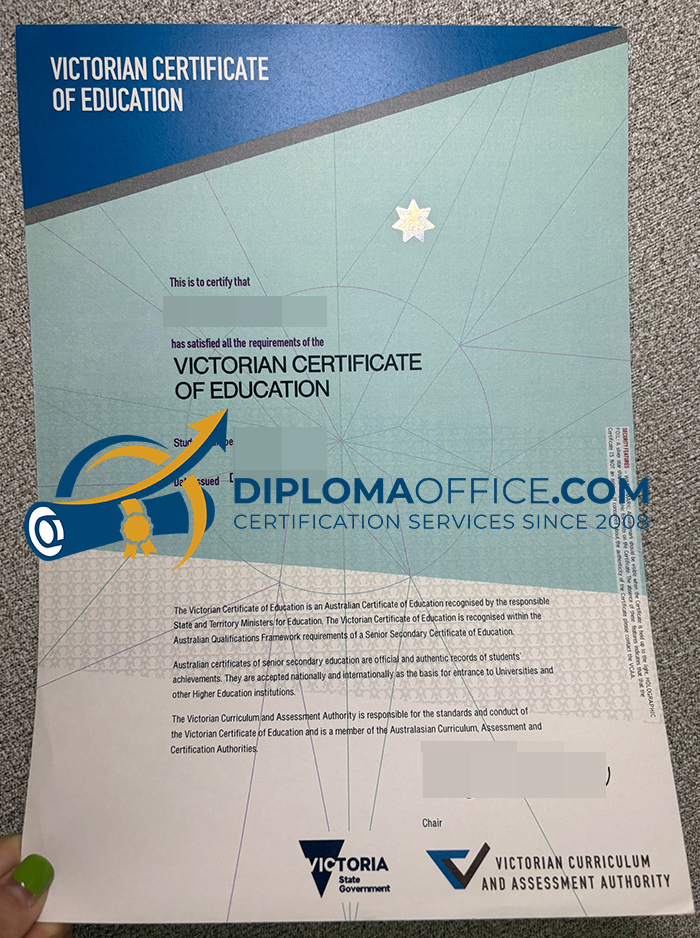
The Victorian Certificate of Education, universally shortened to VCE, serves as the official senior secondary school qualification for Year 11 and Year 12 students in Victoria, Australia. Administered by the Victorian Curriculum and Assessment Authority (VCAA), this rigorous academic pathway offers flexible subject selection, balanced assessment rules, and global recognition for university admission and employment. Delivered both locally across Victorian schools and offshore at approved international campuses, the programme draws comparisons with A-Levels, IB Diploma and AP curricula, yet maintains unique structures tailored to Australian tertiary admissions frameworks. Students aiming for higher education will work toward an Australian Tertiary Admission Rank (ATAR), the primary benchmark used by Australian universities to evaluate school-leavers. Upon satisfying all graduation criteria, candidates receive the official VCE Certificate to document their senior secondary achievement.
Programme Structure and Graduation Requirements
The VCE follows a modular unit framework. Most subjects consist of four semester-long units, labelled Units 1, 2, 3 and 4. Units 1 and 2, usually completed in Year 11, build foundational knowledge and can be studied independently. Units 3 and 4 form a mandatory sequence, completed within the same academic year, typically Year 12; results from these upper-level units generate official study scores ranging from 0 to 50.
To graduate with the VCE, learners must earn satisfactory results for a minimum of 16 units. Mandatory requirements include at least three units from approved English streams (English, Literature or English as an Additional Language), which must contain one Units 3–4 sequence. Students also need three additional separate Units 3–4 subject sequences. Over 90 subjects are available across sciences, humanities, mathematics, visual and performing arts, languages, technologies and vocational training, allowing students to align their study plans with intended university majors. Many schools integrate VCE VET units, combining academic learning with practical vocational skills.
Assessment Methods and ATAR Calculation
VCE assessment combines school-based coursework and formal external examinations, creating a balanced evaluation model instead of relying solely on final exams. School-assessed coursework (SACs) are completed throughout the academic year under teacher supervision, covering essays, practical projects, presentations and research tasks. External exams set by the VCAA take place at the end of Year 12 for all Units 3–4 subjects.
Study scores are scaled annually to standardise results across different subjects before feeding into ATAR calculations. An ATAR is a percentile rank between 0.00 and 99.95, comparing a student’s performance against all VCE graduates in that cohort. Only students who complete sufficient scored Units 3–4 sequences qualify for an ATAR. This rank remains the primary pathway for entry into Australian undergraduate degrees, though TAFE vocational courses often accept VCE graduates without requiring a competitive ATAR.
Domestic and International Recognition
Within Australia, all public and private universities accept VCE results for undergraduate applications. Internationally, the qualification is recognised by universities in the United Kingdom, the United States, Canada, Singapore, Hong Kong, New Zealand and many European nations. Top global institutions treat competitive ATAR scores as equivalent to other mainstream senior secondary credentials, though applicants may need supplementary documentation such as language proficiency test results.
A growing network of offshore schools delivers accredited VCE programmes across Asia, enabling international students to complete Australian secondary education without relocating to Victoria. For international learners, flexible credit transfer policies allow recognition of previous secondary study, shortening the total duration required to complete the qualification.
Career and Further Education Pathways
The VCE opens multiple pathways beyond university admission. Graduates can enrol in vocational training at TAFE institutes, commence apprenticeships, or enter direct employment. Students unsure of university pathways benefit from the curriculum’s breadth: they can select a mix of academic and practical subjects to test career interests. Unlike rigid exam-focused curricula, the VCE encourages critical thinking, independent research and communication skills, competencies valued by both higher education institutions and global employers.
Conclusion
As a well-established, government-regulated senior secondary qualification, the Victorian Certificate of Education balances academic rigour with personalised learning flexibility. Its hybrid assessment system, broad subject catalogue and international acceptance make it a trusted choice for domestic Victorian students and overseas learners alike. Whether students aim for competitive university degrees, vocational training or early workforce entry, successful completion of the VCE creates sustainable, globally recognised pathways for long-term academic and professional growth.